Air Fryer Fish and Chips for Beginners: A Step-by-Step Crispy Guide
A proper plate of fish and chips needs a crust that shatters and chips that stay crisp to the last bite. An air fryer can deliver both, but not if you copy a deep-fry recipe and hope for the best. Wet batter, a crowded basket and a damp fillet are the three things that produce pale, sad results. This guide walks through the adjustments that actually matter: how to coat the fish so the crust holds, how to get potatoes properly crisp, and the order to cook everything so it reaches the plate hot.
Why Air Fryers Struggle With Fish and Chips
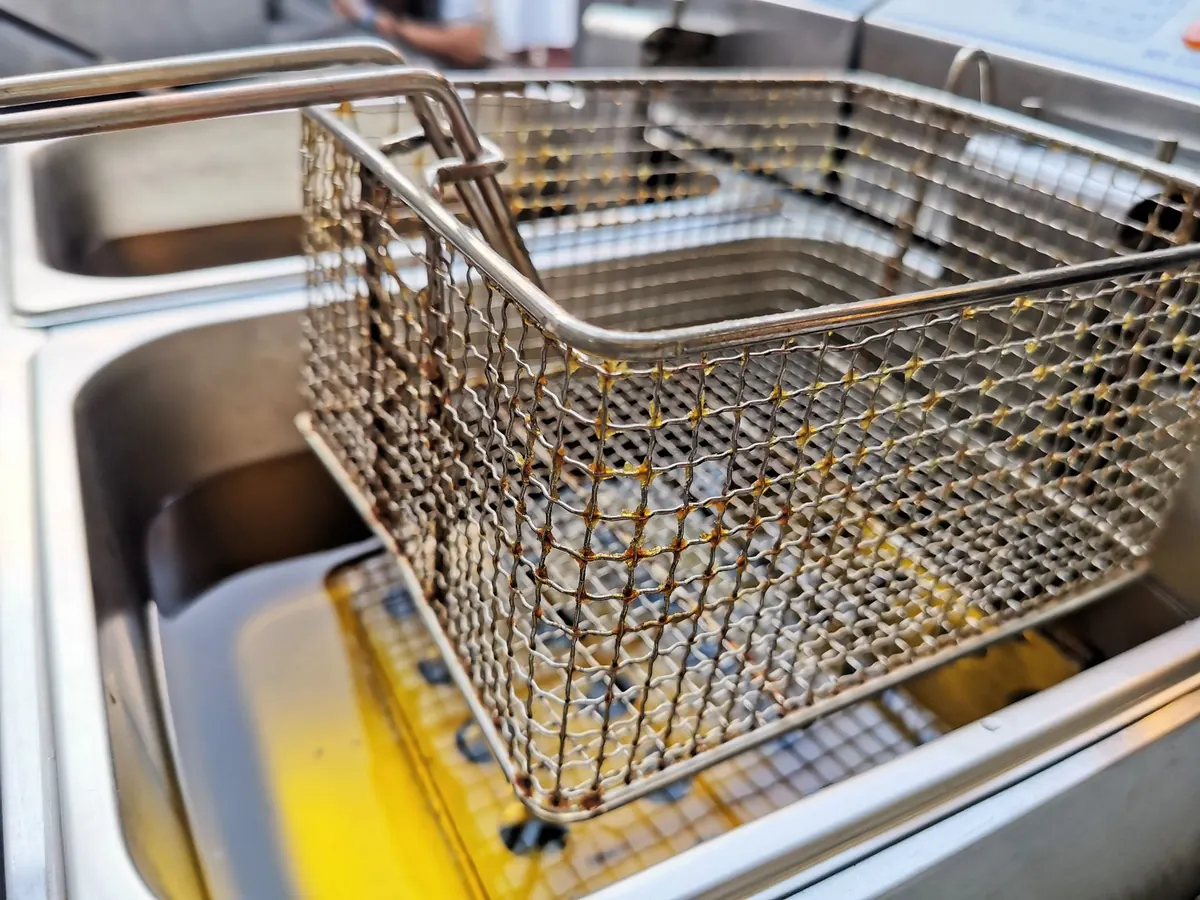
An air fryer is a small oven with a very strong fan. It moves hot, dry air around the food, which is brilliant for browning and terrible for anything wet. In a deep fryer, batter hits oil at around 180°C and sets within seconds, trapping steam inside and turning golden. In an air fryer, that same batter drips through the basket grate, pools in the drawer and bakes into a chewy, patchy shell before it ever crisps.
Chips have a related problem. Potatoes are roughly 80 percent water, and all that moisture has to leave before the surface can brown. If you pile them in, the fan can't reach the ones in the middle and they steam instead of crisping. Everything below is really about solving those two issues: too much liquid, and not enough airflow.
Fix the Batter Before You Fix the Fish
For beginners, the reliable route is a three-stage dredge rather than a poured batter. It clings to the fish, survives the fan, and gives you a crunchy shell that doesn't slide off.
- Pat the fillets bone dry with kitchen paper, then season with salt and pepper. Moisture is the enemy of adhesion.
- Dust with plain flour. A thin coat gives the egg something to grip.
- Dip in beaten egg — one large egg with a teaspoon of water is plenty for two fillets.
- Press into panko or coarse dry breadcrumbs seasoned with a little salt, pepper and paprika. Press firmly with your palm so the crumbs stick.
Lightly spray or brush the coated fillets with a neutral oil. This isn't optional if you want colour; the crumbs need a film of fat to go golden rather than grey. A pump sprayer is gentler on non-stick coatings than an aerosol can.
If You Really Want a Wet Batter
It can work, but only as a thick paste: roughly equal volumes of flour and cold beer or sparkling water, mixed to the consistency of wallpaper paste, with a teaspoon of oil stirred in. Dip, let the excess drip off for a second, and lay the fish straight into a preheated, oiled basket. Anything thin enough to pour will pool. Expect a slightly softer crust than the dredge gives you.
The Chips: Parboil, Dry, Then Air Fry
Floury potatoes — Maris Piper, King Edward, Russet, Yukon Gold — give the fluffy interior you want. Waxy salad potatoes turn glassy and greasy, so save those for something else. Cut batons about 1cm thick and keep them a consistent size; thin ones burn while thick ones stay raw.
- Rinse the cut chips in cold water, then soak for 20 minutes if you have time. This washes off surface starch, which is what makes chips stick together.
- Parboil in salted water for 5–7 minutes, until the edges soften but the centre still resists a knife. Drain well.
- Leave them in the colander for five minutes to steam dry, then shake gently to rough up the surfaces. Those ragged edges are where the crunch comes from.
- Toss with a tablespoon of oil — enough to coat every chip, not enough to pool in the drawer.
- Air fry at 180°C (360°F) for 12–15 minutes, shaking the basket every 5 minutes. Then raise to 200°C (390°F) for 7–10 minutes until deep golden and crisp.
- Salt the moment they come out, while the surface oil is still hot.
Never fill the basket more than about two-thirds full for chips. Two smaller batches always beat one crowded one, and cooked chips reheat beautifully in the air fryer for two or three minutes at 200°C.
Cooking the Fish and Timing the Whole Plate
Preheat the air fryer for 3–5 minutes at 200°C (400°F). Arrange the coated fillets in a single layer with a little space between them — no stacking, no overlapping. Air fry for 10–12 minutes, flipping carefully with a spatula halfway through. Thick fillets of cod or haddock may need 12–14 minutes; thin ones like plaice or tilapia can be done in 8.
Judge by the fish, not the clock. It's ready when the coating is deep golden and the thickest part flakes easily and reads 145°F (63°C) on an instant-read thermometer. If the crumbs are browning faster than the fish is cooking, drop the temperature to 180°C and add two minutes.
The Order That Works
Start the chips first, because they take the longest. While they parboil and air fry, coat the fish and let it sit on a plate. When the chips come out, keep them warm in a low oven or under a tent of foil while the fish goes in. If you only have one drawer and no warm place, cook the fish first and refresh the chips for two minutes afterwards — better than serving cold fish, which no amount of sauce rescues.
Beginner Troubleshooting
- Coating slides off: the fillet was still wet, or you moved it before the crust set. Pat dry and don't touch it for the first five minutes.
- Soggy crumbs: too much oil spray, or the basket was overcrowded and steam couldn't escape.
- Pale, soft chips: usually too many in the basket or too little oil. Increase the shaking, reduce the batch size.
- Dry fish: almost always two or three minutes too long. Set a timer for the shorter end of the range and check.
- Burnt patches on top: the heating element sits close to the food. Flip earlier and lower the temperature slightly.
Your First Batch, Start to Finish
Pick one fish, one potato, and write down the time and temperature you used. Next time, change one thing — a longer parboil, a coarser crumb, a slightly higher finishing temperature — and you'll build a version that suits your machine, because air fryer models vary far more than ovens do. Preheat properly, keep everything dry, don't crowd the basket, and season the second it comes out. Do that and you'll get crisp fish with a crust that holds, chips with real crunch, and a Friday-night plate that doesn't need a litre of oil to earn its place.
Photo: khats cassim / Pexels