Seasonal Fish and Chips: What to Order in Summer, Autumn, Winter, and Spring
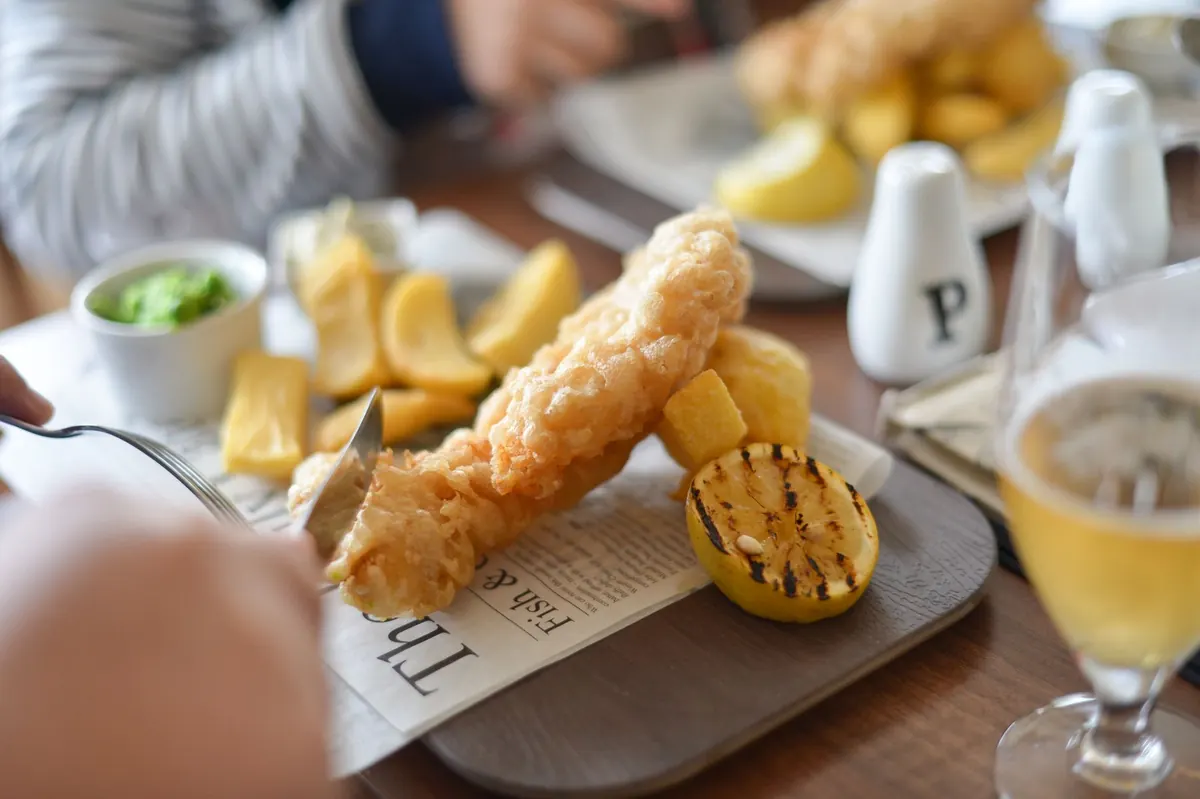
Fish and chips runs on routine. Same shop, same Friday, same order. That routine is a pleasure, but it hides something useful: the best tray in July is not the best tray in January. In summer you want something light, sharp and eaten within minutes of leaving the counter. In winter you want a table, a fork, and a pot of curry sauce to dip into while your hands thaw out.
The chips barely change. What changes is the fish, the sides you pair with it, and the setting you eat it in. Here is how to order well right through the year.
Summer: Light Fish, Sharp Sides, Open Air
Hot weather calls for flat fish. Plaice and lemon sole are thin, delicate and fry quickly, so they arrive crisp rather than heavy. Haddock still works beautifully, with a little more flavour and body than cod. If the shop has a lemon wedge, take it.
On the sides, lean sharp and cool. Garden peas instead of mushy. Pickled onions, a gherkin, coleslaw, tartare sauce. A tub of curry sauce on a hot evening can feel like too much, though nobody will judge you for it.
The setting matters most in summer. Eat outside, on a sea wall, a park bench or the boot of a car. Keep the paper open rather than folded shut. Steam is the enemy of batter, and a sealed bag turns crisp fish soft in the time it takes to walk to the bus stop.
Summer pitfalls
A polystyrene box left on a warm car seat is the worst place for a fish supper. If you are driving home, crack the lid or ask them to leave the paper loose. Salt first, vinegar last, and not much of it, because vinegar starts softening the batter the moment it lands.
Autumn: Bigger Flavours, Longer Walks
As the evenings close in, appetite changes. Haddock and cod move back to the front of the queue. The sides get warmer and heavier: mushy peas, curry sauce, a battered sausage on the side, a pea fritter or potato fritter if the shop does them, and a buttered barm or roll to mop up.
Autumn is the season for eating while walking. The food warms your hands through the paper, and a brisk twenty minutes in the dark makes the last few chips taste better than the first. Buy from a shop near a park or a canal rather than one near your front door.
Winter: Sit In, Order Dense
Winter is the season to eat in. Find a shop with tables, a metal fork and a mug of tea, and settle in. Cod, hake or coley all work, and so do fish cakes or fish pie when a shop makes them properly. Thick fillets hold their heat and their crunch far better than thin ones on a cold night.
This is also when the heavier sides earn their place. Gravy in the north, curry sauce everywhere, scraps scattered over the chips, potato scallops, pickled onions and a slice of buttered bread. Order in two rounds if you are sharing a large portion, so the second half arrives crisp instead of sitting under a lamp going soft.
Spring: The In-Between Season
Spring is the season people forget. Cod roe runs from late winter into spring, and herring roe arrives around the same time. Battered roe with chips is cheap, rich and genuinely one of the best things on the menu. Plaice and lemon sole come back into play, and scampi starts to feel right again.
Go lighter on the sides: garden peas, a side salad, tartare, a lemon wedge. Then eat outside for the first time that year, on a bench in weak sun, with a jacket zipped to the chin because you are not fooling anyone.
Sides That Follow the Calendar
- Summer: garden peas, pickled onions, gherkins, coleslaw, tartare sauce, lemon.
- Autumn: mushy peas, curry sauce, battered sausage, fritters, buttered bread.
- Winter: gravy, curry sauce, scraps, potato scallops, mushy peas, pickled onions.
- Spring: roe, scampi, minted peas, salad, tartare sauce.
How to Order Well, Whatever the Month
- Ask what is fresh. "What's in today?" is the most useful question in any chip shop. Staff know what was delivered this morning and what has been waiting since Tuesday.
- Match the fish to your journey. Eating on a bench two minutes away? Order plaice or lemon sole. Driving twenty minutes home? Order cod or haddock, which survive the trip better.
- Keep the paper open. A closed bag traps steam, and steam ruins batter faster than a long queue ever will.
- Add salt before vinegar, and go easy on the vinegar. It keeps working on the crust all the way home.
- Order in rounds when you are feeding a crowd. Two smaller trays eat better than one enormous one that cools as it goes.
- Ask for scraps. They are usually free, and they turn a plain bag of chips into something worth the walk.
- Learn your shop's rhythm. Every fryer has a quiet half hour and a rush. The same fish tastes better at the quiet end of the evening.
A Year of Trays
Build yourself a rotation. Plaice on the seafront in July. Haddock with curry sauce on an autumn walk. Cod and gravy at a Formica table in January. Roe and chips on the first bright Saturday in March. You will eat better than most people who order the same thing every week of their lives.
None of it matters more than the shop itself. A good fryer with a clean range and fresh oil beats any calendar, so if you find one, keep going back and let the seasons do the rest. If you are managing a health condition and want to know how a regular fish supper fits your diet, that is a conversation to have with your GP or a dietitian rather than a chip shop.
Photo: Rosa Stone / Pexels